
Preparing Your Rudrapur Home Before Each Season
A home in Rudrapur doesn't face the same pressures all year round. Summer pushes cooling appliances and electrical load to their limit. Monsoon tests roofs, drainage, walls and outdoor areas. Winter shifts the load onto geysers, heaters, inverters and ventilation.
Most home problems don't appear out of nowhere — they build up quietly and then show up right when a season turns. An AC that was already showing poor cooling in April may become a bigger problem once it is used heavily during summer. A hairline roof crack unnoticed in June turns into an active leak by the second week of monsoon. A geyser making a faint noise in October can trip the MCB the first cold night it's used continuously.
This guide is built around that idea: what a Rudrapur homeowner should check before a season starts, so problems are caught while they're still small and inexpensive to fix.
This is not a month-by-month maintenance schedule — for that, DHOOP has a separate guide, Complete Home Maintenance Calendar for Rudrapur: What to Check Every Month, covering routine upkeep across all twelve months. This article focuses specifically on seasonal transitions — what changes between summer, monsoon and winter, what to inspect before each, why it matters, and when a job needs a professional rather than a homeowner's own effort.
Why Seasonal Home Maintenance Matters in Rudrapur
A house doesn't use all its systems equally throughout the year. Coolers and ACs sit idle for months and are then expected to run for hours a day the moment it gets hot. Geysers go unused through summer and are suddenly needed daily once winter sets in. This on-off usage pattern is exactly when hidden problems surface — a fan motor fine at low use struggles under daily strain, and a geyser element that was quietly failing shows itself only when switched on again after months.
A few practical reasons seasonal checks matter more than a general "check everything once a year" approach:
- Different appliances carry different loads in different seasons. Checking your geyser in May tells you nothing about how it will perform in December.
- Rain exposes problems that stay hidden the rest of the year. A roof crack or weak waterproofing often shows no symptoms until water actually sits on it.
- Electrical load rises sharply with each season's main appliance — ACs and coolers in summer, geysers and heaters in winter — and old wiring or loose connections tend to show stress under load.
- Moisture from monsoon can quietly affect walls, furniture and electronics for weeks after the rain itself has stopped.
- Catching an issue before the season starts means you can plan a repair calmly, rather than treat it as an emergency during the first heatwave, downpour or cold snap.
The sections below cover what to check before each of Rudrapur's three main seasons, the warning signs to watch for, and where the line sits between a safe homeowner check and a job that needs a professional.
Before Summer: Rudrapur Home Maintenance Checklist
1. AC and Cooling Systems
Before the heat sets in is the right time to confirm your AC is ready for daily use, not just that it switches on.
What to check: whether it cools at a normal pace, the condition of air filters, whether the indoor unit drains properly, that the outdoor unit's surroundings are clear of debris, any unusual noise, water leakage from the indoor unit, and that the remote and controls respond normally.
Warning signs: poor cooling, water leaking indoors, a musty or burning smell, rattling or grinding noise, or the unit switching off and restarting on its own.
Safe to do yourself: clean or rinse a removable filter, wipe down visible parts, and clear debris around the outdoor unit.
Call a professional when: cooling has dropped, there's water leakage indoors, a gas or burning smell, or new noise — these usually point to gas, drainage, electrical or compressor issues.
2. Fans and Air Coolers
Ceiling fans and air coolers often sit unused for months and deserve a quick check before they're needed daily.
What to check:
- Fan speed at each setting, and whether it wobbles at high speed
- Any grinding, ticking or humming noise from the motor
- Cooler pump function and water circulation
- The cooler's water tank for cracks or leaks
- Cooling pads, which degrade over a season and often need replacing
- Power cables for visible fraying or damage
A wobbling or unusually loud fan often means a loose blade or worn bearing — a simple fix if caught early, but worth a professional's look rather than continued use.
3. Refrigerator and Other Appliances
Refrigerators run constantly, and summer heat adds extra strain.
What to check:
- Whether cooling feels consistent, or the fridge seems to be working harder than usual
- The door gasket/seal — a loose or worn seal makes the compressor work overtime
- Any unusual or constant running noise
- Whether the back or sides feel unusually hot
- Visible damage to plugs or power cables
A fridge that feels warm on the outside, cools unevenly, or has become noisier is worth checking before summer, not during it, when food spoilage becomes a real risk.
4. Electrical Load
Summer means more appliances drawing power at once — ACs, coolers, fans and refrigerators often run together for hours. This is when weak points in a home's wiring tend to show themselves.
What to check:
- Whether MCBs trip more often than usual under combined load
- Sockets or switchboards that feel warm to the touch
- Discolouration around sockets or switch points
- Extension boards overloaded with multiple high-draw appliances
- Loose-fitting plugs, or any burning smell near sockets or the meter area
Important: these are observation checks only. Do not open switchboards, attempt to replace an MCB, or carry out any electrical repair yourself. Repeated tripping, warm sockets, discolouration or a burning smell should go straight to a qualified electrician — these are early signs of an overloaded or failing circuit, and delaying the check is what turns a minor fix into a bigger, costlier one.
5. Water Storage and Plumbing
Summer usage patterns put more demand on water storage and supply.
What to check: the overhead tank for visible cracks or damage, that the tank lid is intact, visible leaks along pipes or joints, taps for drips or reduced flow, overall water pressure, and RO/purifier performance and leakage.
6. Inverter and Battery
Power cuts tend to coincide with peak summer load, so it's worth confirming your backup actually works before you need it.
What to check:
- Battery condition and how backup duration compares to before
- Visible corrosion around terminals
- Adequate ventilation around the inverter area
- Any unusual smell near the battery, which can indicate overheating or a fault
Do not attempt to open, top up, or repair a battery yourself, especially with swelling, leakage or a strong smell — these need a professional's attention, and a swollen casing shouldn't be handled without care.
7. Roof, Terrace and Windows
Monsoon is the bigger concern for roofs, but a pre-summer check is useful because heat itself can widen existing cracks and dry out weak waterproofing before the rain arrives.
Check visually, from a safe position: cracks on the terrace or roof surface, loose tiles or waterproofing material, whether drainage outlets are clear, window seals for gaps or wear, and any area that looked problematic last monsoon and hasn't been addressed since.
Before Monsoon: Rudrapur Home Maintenance Checklist
This is usually the season that causes the most disruption when preparation is skipped.
1. Roof and Terrace
What to check:
- Cracks, however small, especially along joints and edges
- Damaged, peeling or bubbling waterproofing
- Standing water after a light rain or after washing the terrace
- Whether drainage outlets are clear and water flows away properly
- Old leakage marks on the ceiling below, indicating an issue never fully resolved
If waterproofing is damaged, cracked, or past its effective life, or if water doesn't drain within a reasonable time, this needs professional waterproofing — ideally before the first heavy rain, not after leaks have already started indoors.
2. Rainwater Drainage and Downpipes
What to check:
- Leaves, plastic waste, mud and silt collected in gutters or drainpipe openings
- Whether downpipes and drainage outlets are clear and appear to allow water to flow freely
Blocked drainage is one of the most common — and most preventable — causes of water accumulation on terraces and around building edges. A partially blocked pipe can back up enough water to seep into a roof or wall that would otherwise stay dry.
3. Walls and Ceilings
What to check:
- Damp patches from previous seasons that never fully dried out
- Any new staining, even faint
- Cracks, particularly ones that have widened
- Peeling or bubbling paint
- A musty smell, which often shows up before a visible stain does
Don't simply repaint over a damp wall. Painting over a damp patch without fixing the actual water source usually just hides the problem for a few months before it resurfaces — often worse, since moisture keeps sitting behind the new paint.
4. Plumbing and Bathroom Areas
What to check:
- Pipe joints for seepage or corrosion
- Taps for drips, and bathroom fittings generally
- Slow-draining sinks or floor drains
- Leaks under sinks, easy to miss until a cabinet is opened
- The toilet area for leakage at the base
5. Electrical Safety During Rain
Monsoon combines water and electricity in ways that need real caution.
What to check:
- Outdoor lights and fittings for water ingress
- Outdoor sockets, if any, and whether they're properly covered
- The meter area for exposure to rain
- Extension cords used near doors, balconies or outdoor spaces
- Any wall showing dampness near an electrical point or switch
Worth repeating clearly: never touch a wet switch, socket, appliance or exposed wiring. If a switch or socket is damp, or water is near the meter or distribution board, switch off the main supply if it's safe to do so and call an electrician. Don't inspect or fix it yourself while it's wet.
6. Doors and Windows
What to check:
- Gaps around door and window frames
- Worn or damaged seals
- Warping or swelling of the frame itself
- Points where water visibly seeps in during rain
- Doors or windows that have become hard to close, often a sign the frame has already absorbed moisture
7. Wooden Furniture and Carpentry
Moisture during monsoon affects wood even indoors, particularly in poorly ventilated rooms. Watch for cupboard doors that start sticking, drawers that no longer slide smoothly, or a musty smell inside almirahs and wardrobes. Wooden window and door frames are especially exposed. Catching swelling or warping early usually means a simpler carpentry fix rather than a full replacement.
8. Outdoor Areas
What to check:
- Standing water anywhere on the property after rain
- Balcony and terrace drainage
- Garden areas for waterlogging
- Surfaces that become slippery when wet, particularly steps or tiled walking areas
Before Winter: Rudrapur Home Maintenance Checklist
1. Geyser
A geyser unused since last winter needs a proper check before daily use resumes.
What to check:
- Whether it heats water at a normal pace
- Any leakage around the unit or its pipe joints
- Cable and switch condition
- MCB behaviour when switched on
Warning signs: water leakage, repeated MCB tripping, any tingling sensation when touching water or the unit, unusual noise, or poor heating.
If you notice any of these — especially a tingling or shock sensation — stop using the geyser immediately and have it inspected before switching it on again. This is one appliance where "wait and see" isn't worth the risk.
2. Heaters and Winter Appliances
What to check:
- Plugs and cables for visible wear or damage
- Any burning smell when switched on
- Whether it heats normally, or unevenly
Safe placement matters as much as condition. Keep heaters well away from curtains, bedding, furniture and anything else combustible, and never leave one running unattended in a small, enclosed space.
For fuel-burning heaters specifically: never use them in an enclosed space without adequate ventilation, and always follow the manufacturer's safety instructions exactly.
3. Inverter and Battery
What to check:
- Backup duration compared to previous winters
- Visible corrosion at battery terminals
- Adequate ventilation around the inverter setup
- Any unusual smell, which can indicate overheating or failure
4. Doors and Windows
What to check:
- Gaps that let in cold drafts
- Whether the closing mechanism still works smoothly
- Damaged or warped frames from monsoon that were never addressed
5. Dampness and Ventilation
Winter often traps moisture indoors rather than removing it, since windows stay closed more and rooms get less airflow.
What to check:
- Bathroom dampness, especially without an exhaust fan
- Condensation on walls, particularly in corners
- A musty smell in closed rooms
- Damp corners that don't fully dry out
Basic ventilation — opening windows for part of the day even in cold weather, or running exhaust fans in bathrooms and kitchens — genuinely helps reduce moisture buildup and the mould or musty smells that come with it.
6. Plumbing
What to check:
- Slow, easy-to-miss leaks that worsen in cold weather as materials contract
- Tap condition and pipe joints
- Bathroom fittings generally
- Any drop in normal water supply pressure
Summer vs Monsoon vs Winter: Quick Comparison
| Season | Main Risks | What to Check First | Professional Help |
|---|---|---|---|
| Summer | Cooling load, electrical strain, water storage, appliance overheating | AC, fans, sockets, water storage | AC, electrical or appliance service |
| Monsoon | Leakage, dampness, drainage, electrical exposure to moisture | Roof, drains, walls, electrical safety | Plumber, electrician, waterproofing specialist |
| Winter | Geyser faults, heater safety, inverter backup, trapped moisture | Geyser, heaters, inverter, ventilation | Electrician, appliance technician, plumber |
Seasonal Warning Signs You Should Not Ignore
Some signs are worth acting on immediately, regardless of the season:
- Repeated MCB tripping — usually an overloaded circuit or developing fault, not a one-off glitch
- Burning smell from any socket or switchboard — stop using that point and call an electrician right away
- Water anywhere near electrical fittings — never touch it; switch off the main supply if safely possible
- Ceiling leakage — even a small, occasional drip usually means an active roof or plumbing problem above
- Dampness that's spreading rather than staying put — suggests an ongoing water source, not a one-time incident
- Plumbing leaks that keep recurring — usually means the underlying fix wasn't complete
- A geyser giving any tingling or shock sensation — stop using it immediately
- An appliance that feels unusually hot to the touch — switch it off and have it checked
- A swollen or bulging battery casing — don't handle it; this is a safety issue, not a routine repair
- Cracks visibly widening over time — different from an old, stable hairline crack
- Mould or persistent musty smell that ventilation doesn't clear — often moisture trapped out of sight
The point isn't to self-diagnose precisely — it's recognising which signs are worth acting on quickly rather than monitoring for a few more weeks.
What Homeowners Can Safely Do Themselves
Plenty of useful seasonal prep is genuinely safe to do without a professional:
- Visual inspections of roofs, walls, appliances and fittings
- Dated photos of cracks, stains or damage to track whether they're worsening
- Clearing accessible debris from drains, gutters and terrace outlets
- Cleaning removable AC filters and cooler tanks/pads
- Keeping drainage outlets clear wherever safely reachable
- Moving furniture away from damp walls
- Keeping rooms ventilated, especially bathrooms and kitchens
- Keeping a simple record of recurring problems — when, where, how often
- Checking visible appliance cables for fraying, without opening the appliance
DIY does not mean: electrical rewiring, opening switchboards or distribution panels, repairing live electrical equipment, roof work on wet or slippery surfaces, opening pressurised pipes, repairing a geyser's internal electrical components, or opening up any appliance with an electrical fault.
The line is simple: looking, listening or light cleaning is usually safe. Opening something electrical, working at height on a wet surface, or touching anything that could be live or pressurised is a professional's job.
When to Call a Professional
| Problem | Safe homeowner check | Professional needed when |
|---|---|---|
| AC problem | Clean filters, check visible drainage | Poor cooling, indoor leakage, gas or electrical/compressor issue |
| Electrical issue | Visual inspection only | Repeated tripping, sparks, burning smell, visibly damaged wiring |
| Water leakage | Locate the visible source if possible | Leak is concealed, recurring, or source isn't obvious |
| Roof issue | Visual inspection from a safe position | Waterproofing needed, significant cracks, active leakage |
| Plumbing | Check visible fittings and drains | Recurring blockage, concealed leaks, low pressure that doesn't resolve |
| Geyser | Visual check only when switched off | Any leakage, electrical fault, repeated tripping, tingling sensation |
| Dampness | Note location and how it's spreading | Persistent or spreading dampness, visible mould |
| Furniture damage | Note visible swelling or warping | Structural damage, or damage that keeps recurring |
Seasonal Home Maintenance Planner
Before Summer
- ☐ AC
- ☐ Fans and cooler
- ☐ Refrigerator
- ☐ Electrical load
- ☐ Water storage
- ☐ Inverter and battery
- ☐ Roof and windows
Before Monsoon
- ☐ Roof
- ☐ Rainwater outlets
- ☐ Downpipes
- ☐ Walls and ceilings
- ☐ Plumbing
- ☐ Electrical safety
- ☐ Windows and doors
- ☐ Outdoor drainage
Before Winter
- ☐ Geyser
- ☐ Heaters
- ☐ Inverter and battery
- ☐ Doors and windows
- ☐ Ventilation
- ☐ Dampness
- ☐ Plumbing
How DHOOP Can Help with Home Service Needs in Rudrapur
Going through this checklist tells you what needs attention — the next step is finding the right person for the job. DHOOP is a home-services platform connecting Rudrapur households with professionals across categories like electricians, plumbers, carpenters, AC and appliance repair, and house cleaning.
You can discuss the service requirement and applicable charges before the visit.
DHOOP website: https://www.dhoopindia.com/
DHOOP contact: +91 75059 55561
Conclusion
Each season asks something different of a home. Summer puts the load on cooling, electrical systems and water storage. Monsoon tests the roof, drainage, walls and plumbing, along with electrical safety around moisture. Winter shifts the pressure onto the geyser, heaters, inverter backup and indoor ventilation.
The common thread is timing — a quick inspection before the season starts almost always costs less time, money and stress than dealing with the same problem once it's already causing damage. Addressing a roof problem before repeated rain can help avoid more extensive damage later. A struggling geyser is a simple fix in October, and a much bigger inconvenience on a cold December night.
Use the checklists above before each season turns, know which checks are safe to do yourself and which need a professional, and don't wait for a full breakdown to act on a warning sign. When a job does need a professional, DHOOP is one option for finding electricians, plumbers, carpenters, AC technicians and cleaning help across Rudrapur — with charges discussed before anyone visits.
Frequently Asked Questions
AC and cooling systems, fans and coolers, refrigerator, electrical load, water storage and inverter backup — these see the heaviest use once temperatures rise.
Roof and terrace, rainwater drainage, walls and ceilings for dampness, plumbing, and electrical safety around any point exposed to moisture.
Check the geyser and heaters for safe operation, confirm inverter backup, look at doors and windows for drafts, and address dampness or poor ventilation before closed-up winter conditions make it worse.
Roof leakage, damp patches on walls and ceilings, blocked drainage, slippery outdoor surfaces, and swelling or sticking in wooden doors and furniture.
A few weeks before you expect to use it heavily — not the first hot week, when cooling problems are most inconvenient and technicians are busiest.
Leaks, unusual noise, MCB behaviour, and heating performance. If there's any tingling or shock sensation, stop using it and get it inspected before switching it on again.
Clear drainage outlets and downpipes, check the roof for cracks or damaged waterproofing, inspect walls for old damp patches, and make sure outdoor electrical points are protected from water.
Electrical rewiring, opening switchboards, repairing live equipment, roof work on wet surfaces, pressurised pipes, or a geyser's internal electrical parts — these always need a qualified professional.
A focused check before summer, monsoon and winter covers the biggest shifts in how a home is used. For regular month-by-month upkeep, DHOOP's home maintenance calendar guide covers the full year.
DHOOP connects Rudrapur households with professionals for electrical work, plumbing, carpentry, AC and appliance repair, and cleaning, with charges discussed before the visit.
Keep reading
Pick whichever guide fits what you need next.
More guides
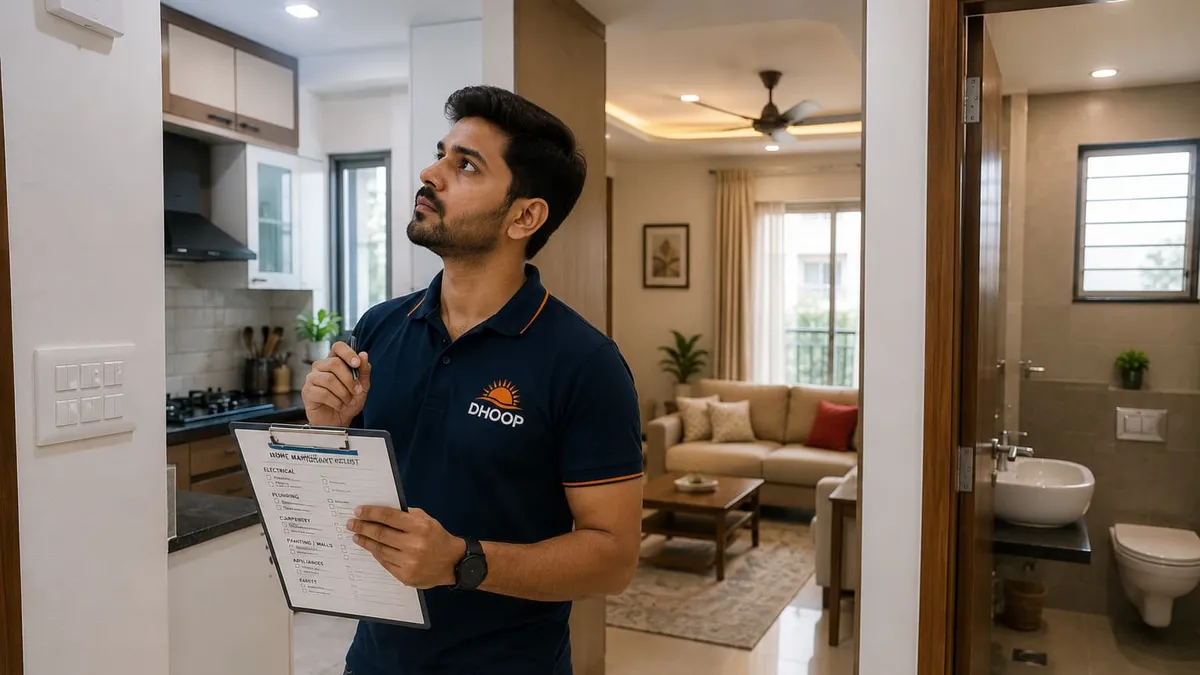
New House in Rudrapur? 25 Things to Check
Moving into a new house in Rudrapur? Use this 25-point checklist to inspect electricity, plumbing, drainage, pests, and more before you move in.
Read guideComplete Home Maintenance Calendar for Rudrapur
A month-by-month home maintenance calendar for Rudrapur: seasonal checks for plumbing, electrical, roof and appliances, plus when to call a professional.
Read guideMonsoon Home Problems in Rudrapur: 15 Things to Check
Learn about 15 common monsoon home problems in Rudrapur, from water leakage and damp walls to drainage and electrical issues, plus what homeowners should check.
Read guide